BRAKES • SAFETY
7 signs your brakes need replacement
If your car squeals, grinds, pulls to one side, vibrates when stopping, or has a soft pedal, your brakes need a look. Here's what each sign means, how urgent it is, and what a proper inspection checks.
Updated November 12th 2026 - 6 min read
WATCH
What noisy brakes are telling you, from our shop floor.
A squeal is an early warning. Grinding, a soft pedal or a brake warning light means stop and get it checked now. A good inspection measures everything and separates urgent repairs from what can wait.
Key takaway
Brakes making noise?
Get a measured brake inspection with photos sent to your phone.
01
Check Soon
Squealing or chirping
Often the wear indicator touching the rotor. Your pads are getting thin.
02
Immediate Attention
Grinding or scraping
Friction material may be gone and metal is hitting the rotor.
03
Immediate Attention
Soft or sinking pedal
Can point to air, low fluid, a leak or a hydraulic fault.
04
Check Soon
Vibration when braking
Sharing in the wheel or pedal from uneven pads or rotors.
05
Immediate Attention
Pulling to one side
Uneven wear, a sticking caliper, or a tire or suspension issue.
06
Check Soon
Longer stopping distance
Needing more road to stop is worth checking even with no noise.
07
Immediate Attention
Brake warning light
Low fluid, a sensor issue, or a problem in the braking system.
Grinding, a pedal that sinks to the floor, a fluid leak, hard pulling, or a red brake warning light. Pull over safely and call us at (650) 946-1856, or arrange a tow.
Don't keep driving on these
Why worn brakes get expensive fast
Pads are designed to wear so your rotors don't. Once the friction material is gone, metal backing hits the rotor, and a pad job turns into pads, rotors and sometimes calipers.
- Longer stopping distances in traffic and emergencies
- Damage to rotors, calipers, and hardware
- Uneven braking and loss of control in the wet.
Hearing one of these sounds?
Our technicians measure your pads and rotors and send you photos before any work is done.
What a brake inspection includes
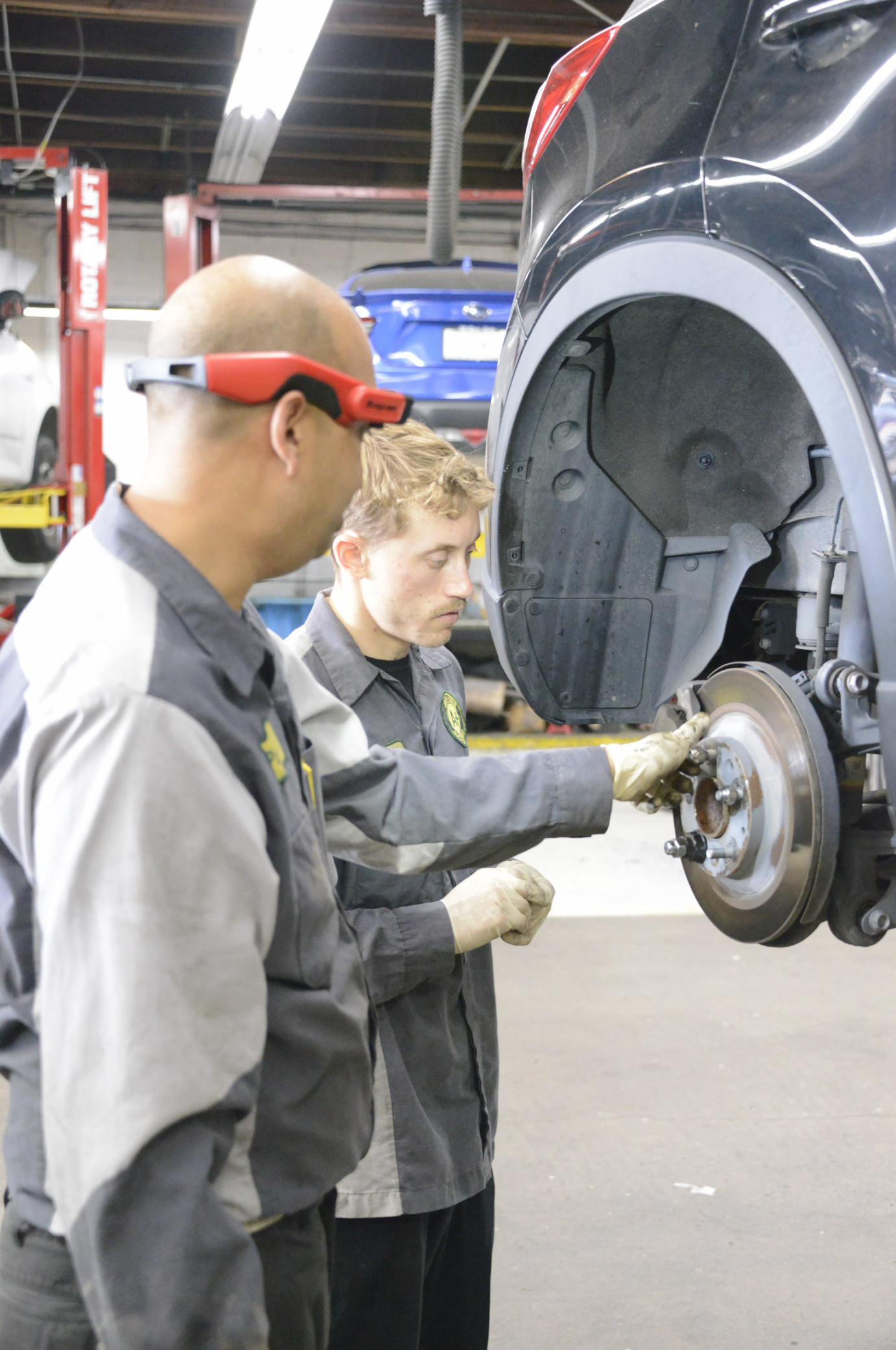
Our ASE-certified techncians tech the whole system, not just a glance at the pads. Not every noise means you need a complete brake replacement. However, every persistent warning deserves a professional evaluation. You can learn more about available brake services before scheduling an appointment.
Why choose A+ for a brake inspection?
We can provide a second opinion and explain your options without assuming every vehicle needs the most expensive repair. The goal should be safe, appropriate work, not replacing parts without evidence.
If you aren't near an A+ location, look for a shop that:
- Explains findings in plain language
- Uses measurements and visual evidence
- Distinguishes urgent work from recommended maintenance
- Provides a written estimate before repairs
- Answers questions without pressure
Frequently asked questions about brake replacement
How often do brakes need replacement?
There is no universal interval. Brake pad life depends on the vehicle, driving style, traffic, terrain, load, and pad material. Have the brakes checked during routine maintenance and whenever symptoms appear.
Should all four brakes be replaced at once?
Not necessarily. Front and rear brakes often wear at different rates. A technician should inspect each axle and recommend service based on measured condition and safe, balanced performance.
What should I do if the brake pedal feels soft?
Avoid normal driving and arrange an urgent inspection. A soft pedal can be caused by air, low fluid, a leak, or another hydraulic fault that may reduce braking ability.
November 12, 2026

Keep reading
BOOK YOUR APPOINTMENT TODAY
Ready for honest, expert auto repair?
Book online in under a minute, or call the shop (650) 946-1856. Free vehicle pickup and drop-off, shuttle service, and same-day repairs available.