How Far Can I Drive On A Flat Tire


October 30, 2015

The short answer for how long you can drive on a flat tire is... at a speed above 35mph, you could cause irreversible damage in under one mile of driving


To properly answer the question "how far can I drive on a flat tire" depends two things: How flat is the tire (the psi) and what type of tire is on your car.


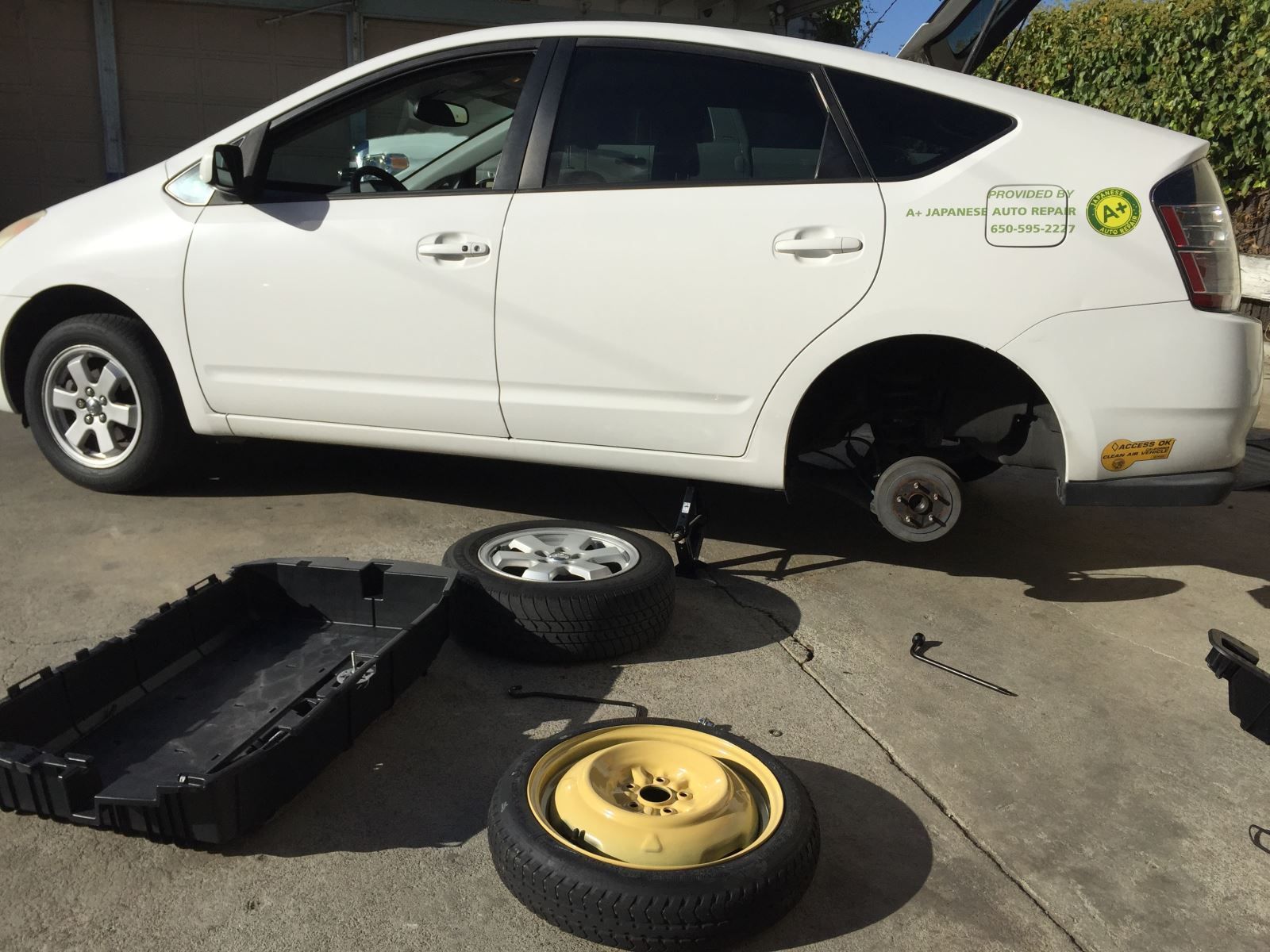
If you need to know how to change a spare tire, click here.


What is considered a flat tire?


A flat tire is considered anything under 20 psi (pressure per square inch). When you are running your tire under 20 psi, the sidewalls of the tire will get very hot, the rubber will breakdown, the tire could come off the rim on a sharp turn, and this will ultimately lead to a tire blowout.


What type of tire does my car have?


Most passenger cars and trucks are equipped with one of the following three types of tires: Run Flat Tires, PAX Tires, or standard passenger tires. You will be able to find which tire your vehicle has inside your owner's manual. The tire designs are explained below.


Run Flat Tires (7% of all cars and trucks)

You typically find run flat tires on sports cars and high end luxury vehicles. These tires allow for the driver to get a “flat tire” (losing all of the air inside the tire) but still drive safely up to 55 mph. 


The tires are able to support the weight of the vehicle due to the heavy duty construction on the tire. These tires are made with extra metal sandwiched between layers of rubber.


PAX Tires (3% of all cars and trucks)

There are a few vehicles that are equipped with PAX tires. A few examples of vehicles that used the PAX tires are the Honda Odyssey and the Toyota Sienna minivan. The PAX run-flat tire system that utilizes a special type of rim with a semi-rigid ring installed in the center of the rim. When the tire goes flat, the rigid ring is there to support the tire from completely folding over onto itself. This PAX style tire allows the driver to continue to drive at a reduced rate of speed until the tire can get repaired or changed.


Standard Passenger Tires (90% of all cars and trucks)

90% of the vehicles on the road are equipped with standard passenger tires. These tires don’t stand up well when they are driven on a flat tire. Most tires are made to drive with no less than 20 psi and no more than 50 psi at any time. 


Also since 2008, all passenger cars sold in the US come standard with a Tire Pressure Monitor System (TPMS) in order to alert the driver of a flat tire. If you have a Tire Pressure Monitor Light on, click here.


Depending on the speed that you are driving at the time of a flat tire, you could cause irreversible damage in under one mile of driving. You should always have a technician inspect your tire for internal damage before just repairing it. The damage may not always appear on the outside of the tire.


If you need to know how to change a spare tire, click here. 


Written By Eric Sevim - ASE Master Certified Mechanic

A+ Japanese Auto Repair, Inc. |

780 Industrial Road San Carlos CA 94070

www.aplusjapaneseautorepair.com

(650) 595-2277


--


Disclaimer: This article is provided for general informational purposes only. It is not intended as advice for your particular vehicle, and should not be relied upon for that purpose. Please consult a qualified automotive maintenance professional to determine the maintenance and repair needs for your vehicle.

White car | A+ Japanese Auto Repair, Inc.
September 3, 2025
Each car has a different approach to change a spare tire. This is a general procedure to change a flat tire on most cars or trucks.
March 1, 2025
Considering an OEM or aftermarket exhaust? Learn the pros and cons of each to make the best choice for your vehicle. A+ Japanese Auto Repair offers expert guidance and installation for both options in San Carlos, CA.
February 1, 2025
Wondering what that dashboard warning light means? A+ Japanese Auto Repair in San Carlos, CA, breaks down common dashboard lights and how to respond. Schedule your vehicle’s diagnostic today!
October 1, 2024
Does idling your car waste more fuel than restarting it? A+ Japanese Auto Repair in San Carlos explores fuel consumption, environmental impact, and best practices for fuel efficiency.
August 1, 2024
Discover how extreme heat affects your vehicle's interior and exterior. Learn practical tips to protect your car from heat damage, maintain performance, and extend its lifespan. Stay informed and keep your vehicle safe under the sun.

Fueling a car | A+ Japanese Auto Repair, Inc.
May 1, 2024
While providing an exact figure is challenging, most vehicles offer a range of 30 to 50 miles once the gas light illuminates. However, this estimate can fluctuate based on driving conditions, vehicle efficiency, and other variables. For this reason, it’s best to get to a gas station as soon as possible to fuel up.
April 22, 2024
Driving with the A/C does indeed reduce fuel efficiency to some extent. However, by understanding the factors that influence fuel consumption and implementing effective strategies to optimize efficiency, you can mitigate this impact and enjoy both comfort and savings at the pump.
February 1, 2023
Toyota vehicles are known for their reliability and durability. However, even the most reliable cars need regular maintenance to keep them running smoothly.
January 2, 2023
These tiny devices attach to your vehicle’s diagnostic system, allowing you to get the service codes behind warning lights on your dashboard.
August 1, 2022
If you own a Lexus, then you know that it is important to keep up with the required maintenance. Not only will this help your car run smoothly, but it will also help maintain its value. When your Lexus presents a check engine light, the team at A+ Japanese Auto Repair is here to investigate your service codes and maint
Show More